How to Stop Your Cat Scratching the Sofa (No Punishment)
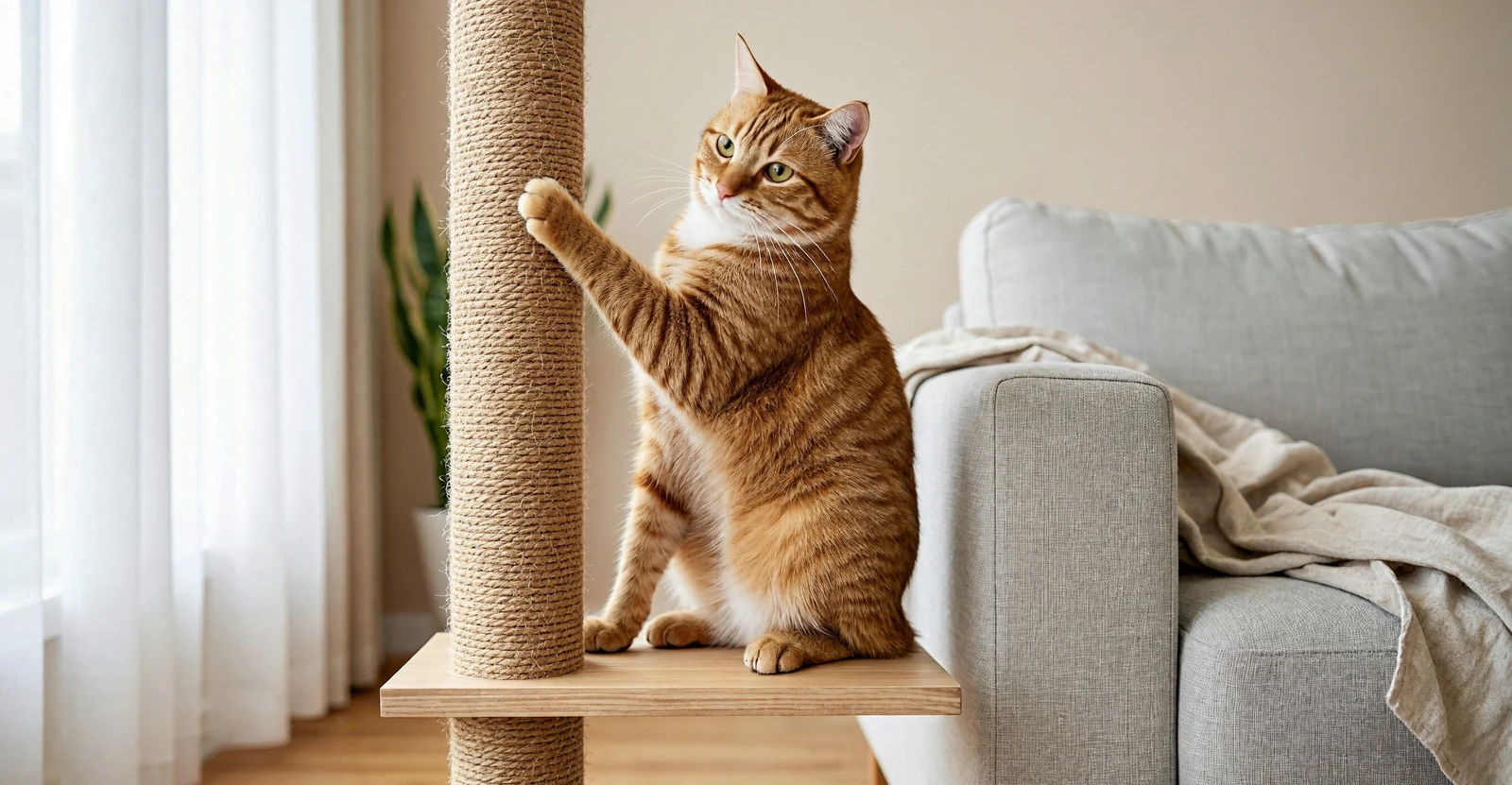
You walk into the living room and there it is again: a row of neat little holes down the arm of the sofa, right where your cat sits. It feels personal, and it is easy to take it personally. But the damage is not a rebellion or a plot. It is a cat doing something cats have always done, in a spot that happens to be expensive. The good news is that this is one of the most solvable behaviour problems in cat care, and the solution is not stricter rules for the cat. It is a better plan for the room. Most scratches happen because your cat has a job to do and the sofa is the only thing on offer that suits it. Give that cat a scratching surface it prefers more than the sofa, place it where the scratching actually happens, and most sofas survive the year. Why your cat picked the sofa in the first place Before you move anything, it helps to understand that scratching is normal, healthy cat behaviour that happens for several different reasons. A single household can have three cats scratching for three different reasons at the same time, which is why a single fix sometimes seems to work for a week and then stops. It is a message, not a tantrum Cats have scent glands in their paw pads. When your cat scratches a surface, it leaves both a visible mark and a scent signature that says something close to this is mine, I was here, I am comfortable in this place. For an indoor cat, the sofa in the middle of the living room is a prime piece of real estate for exactly that message. This is also why scratching often increases when the household changes. A new baby, a visitor, a rearranged room or a cat on the other side of the glass can all make a cat work harder at saying I belong here. Claws need sharpening, and fabric feels good Claws grow in layers, and the outer sheath sheds as the claw sharpens. Scratching tears the loose layer away. A rough woven sofa fabric also gives a claw something satisfying to hook into, in a way that a smooth plastic tray never will. When scratching is about feelings rather than furniture Some scratching is emotional. Cats scratch when they are excited, when they are frustrated, and when they are trying to work off tension. A cat that watches birds from the window and then attacks the sofa arm is not misbehaving; it is finishing a hunt that never happened. The rule of thumb: if the scratching is new, sudden, or happening far more often than it used to, treat it as a signal to investigate rather than as a habit to punish. If it is steady, seasonal or tied to a specific spot, you are probably dealing with a preference problem, and preference problems respond well to a better alternative. Read the timing: what the scratching is telling you Most owners attack the damage without ever collecting the information that would solve it. Two minutes of watching answers more than any guess. Look at the hour before it starts Notice what happens in the run-up to the scratching. Common patterns point straight at the cause. Keep a one-week note A pocket notebook is enough. For one week, jot down the time, the room, what happened just before, and whether the cat was calm or wound up. By the end of the week most owners can see the pattern in three glances, and the right post, the right timing and the right enrichment all follow from it. Give your cat a scratching post worth choosing Scratching posts fail far more often because of placement and surface than because of price. You can spend more and change nothing, or spend modestly and place it perfectly.